
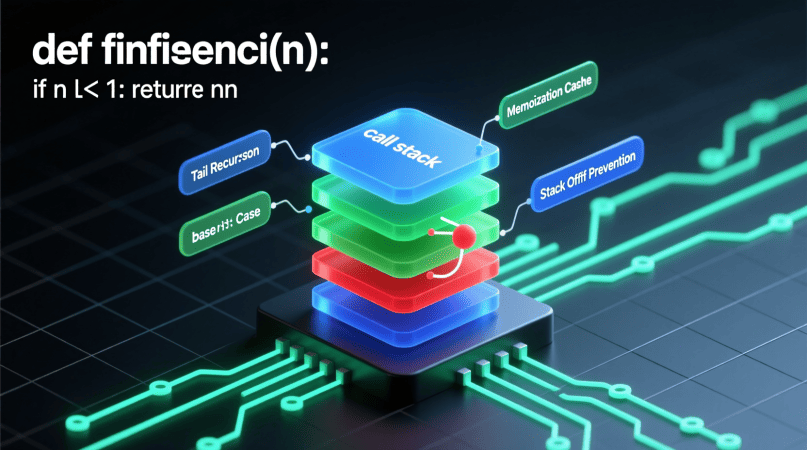
In the realm of game development, performance is paramount. As games become increasingly complex, the need for efficient algorithms grows. One of the most powerful tools in a developer’s toolkit is the recursive function. However, recursive functions can lead to performance bottlenecks if not optimized properly. In this article, we’ll explore how to optimize recursive functions for better game performance, ensuring a seamless player experience.
Understanding Recursion in Game Development
Recursion occurs when a function calls itself to solve a problem. It’s particularly useful in scenarios involving complex data structures like trees and graphs, or when solving problems that can be broken down into smaller subproblems. For instance, pathfinding algorithms often utilize recursion to navigate through game maps.
Common Use Cases of Recursion in Games
- Pathfinding: Algorithms like A* use recursion to find the shortest path between two points.
- Game AI: Decision trees for NPC behavior can be implemented recursively.
- Fractal Generation: Recursive functions help create stunning visuals in games.
While recursion can simplify code and make it more readable, it can also lead to performance issues, especially if not managed correctly. Let’s dive into how we can optimize these functions.
Why Optimize Recursive Functions?
Recursive functions can quickly consume memory and processing power, leading to stack overflow errors or significant slowdowns in gameplay. Optimizing these functions can:
- Reduce memory usage
- Enhance execution speed
- Avoid stack overflows
- Improve overall game performance
Techniques for Optimizing Recursive Functions
Let’s explore some strategies that can help you optimize your recursive functions effectively.
1. Tail Recursion
Tail recursion occurs when the recursive call is the last operation in the function. Some programming languages optimize tail-recursive functions to prevent stack overflow. Here’s a simple example in Python:
def tail_recursive_factorial(n, accumulator=1):
    if n == 0:
        return accumulator
    return tail_recursive_factorial(n - 1, n * accumulator)
In this example, the function calculates the factorial of a number using tail recursion. The accumulator helps carry the result through each recursive call.
2. Memoization
Memoization is a technique that involves storing the results of expensive function calls and returning the cached result when the same inputs occur again. This is particularly useful in recursive functions where the same calculations are repeated. Consider the Fibonacci sequence:
memo = {}

def fibonacci(n):
    if n in memo:
        return memo[n]
    if n <= 1:
        return n
    memo[n] = fibonacci(n - 1) + fibonacci(n - 2)
    return memo[n]
In this example, we store previously computed Fibonacci numbers in a dictionary, drastically reducing the number of recursive calls.
3. Iterative Solutions
Sometimes, recursion can be replaced with an iterative approach. For example, the factorial function can be written iteratively as:
def iterative_factorial(n):
    result = 1
    for i in range(2, n + 1):
        result *= i
    return result
This method avoids the overhead of recursive calls and stack usage, making it more efficient, especially for large inputs.
4. Limit Recursive Depth
To prevent stack overflow, you can limit the depth of recursion. Here’s how you might implement a maximum depth check:
def limited_depth_recursive_function(n, depth=0, max_depth=100):
    if depth > max_depth:
        return
    # Your recursive logic here
    limited_depth_recursive_function(n - 1, depth + 1)
This ensures your function doesn’t exceed a certain depth, safeguarding against stack overflow.
5. Use Data Structures Wisely
Sometimes, using a different data structure can optimize performance. For example, using a stack or queue instead of recursion can be a viable alternative. Here’s a quick example of how to implement a depth-first search using a stack:
def dfs(graph, start):
    visited = set()
    stack = [start]

    while stack:
        vertex = stack.pop()
        if vertex not in visited:
            visited.add(vertex)
            stack.extend(graph[vertex] - visited)
    return visited
Checklist for Optimizing Recursive Functions
Use the following checklist when optimizing recursive functions in your game:
| Optimization Technique | Description | Status |
|---|---|---|
| Tail Recursion | Convert recursive calls to tail calls where applicable. | |
| Memoization | Cache results to avoid redundant calculations. | |
| Iterative Solutions | Consider using loops instead of recursion. | |
| Limit Depth | Set a maximum depth for recursion to prevent stack overflow. | |
| Appropriate Data Structures | Use data structures that enhance performance. |
Real-Life Example: Optimizing Pathfinding in a Game
Let’s consider a real-life scenario where we optimize a pathfinding algorithm using recursion. In a 2D platformer, the AI-controlled character needs to find the shortest path to the player. Initially, the algorithm used a straightforward recursive approach, leading to performance issues.
By implementing memoization, caching the results of previous path calculations, and switching to an iterative depth-first search approach, we managed to reduce the computational complexity significantly. This not only improved the AI’s responsiveness but also enhanced the overall game performance, allowing for smoother gameplay.
Conclusion
Optimizing recursive functions is essential for maintaining game performance as complexity increases. By applying techniques such as tail recursion, memoization, and using iterative solutions, developers can avoid potential pitfalls associated with recursion.
For further insights into recursion in game development, check out our detailed guide: Game Development Recursion: A Comprehensive Guide.
With careful optimization, you can harness the power of recursion while ensuring your game runs smoothly, providing players with the immersive experience they desire.


Panvola
Panvola Debugging Definition Computer Programmer Student Teacher Geek Coder Tech Support Programming IT Insulated Coffee Mug with Handle and Lid Camping Travel Thermal Mugs 14 oz Black

Mouse Pad
BladeHawks Extra Large RGB Gaming Mouse Pad-14 Light Modes, Extended Soft LED Mouse Pad, Anti-Slip Rubber Base, Computer Keyboard Mousepad Mat (31.5 x 12 Inch)

Sound Healing 432 Hz
song transports the listener to a relaxed state of mindfulness and inner peace.

NUBWO U3 Gaming Headset
NUBWO U3 Gaming Headset with Microphone, Safe Volume Limited, Kids Headphones for Switch, Super Lightweight, Rich Sound, 3.5mm Jack for NS, PS4, PS5, Xbox, Tablet, iPad Computer, Red
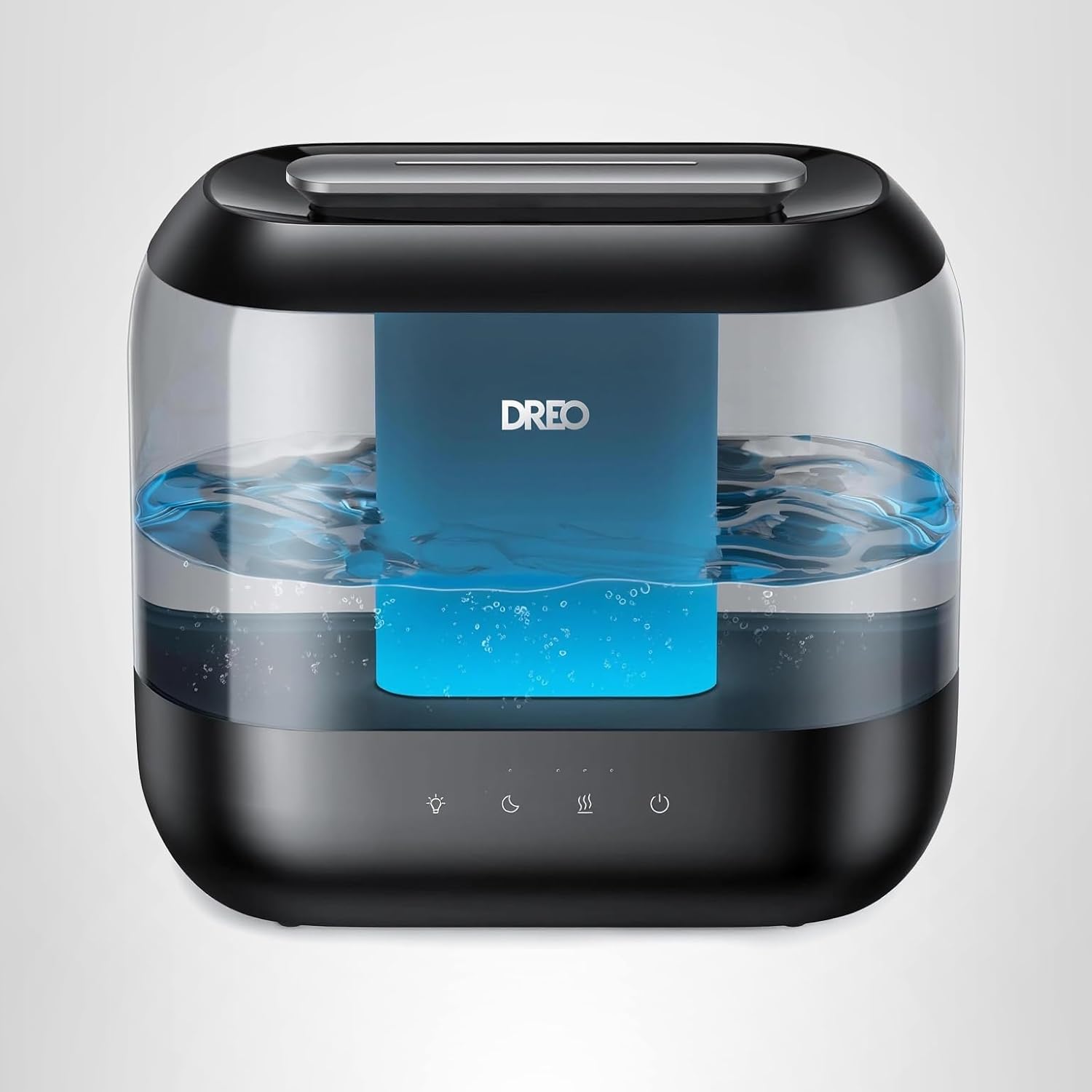
Dreo Humidifiers for Bedroom
Dreo Humidifiers for Bedroom, 4L Top Fill for Large Room, 36H Runtime, 28 dB Quiet Supersized Cool Mist Air Humidifier for Baby Nursery, Plants, Indoor, Night Light, Easy to Clean & Fill, Black